
America Just Reset the Food Pyramid: What Changed—and Does That Mean For You
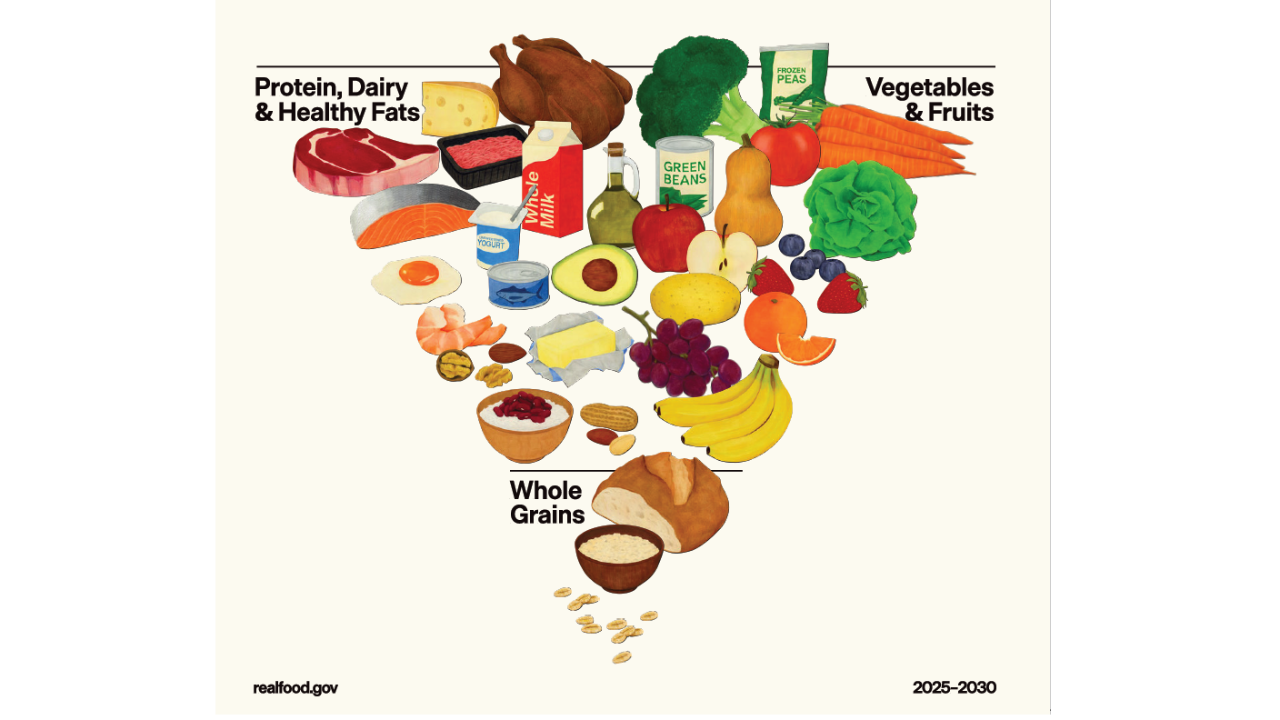
The US just released new Dietary Guidelines and flipped the old model. Here’s what changed, how the original pyramid was created, and what it means for Australian women in midlife.
If you grew up with “carbs at the bottom, fats are evil,” you’re not imagining the whiplash. The US government has just released Dietary Guidelines for Americans 2025–2030 and it’s being positioned as a major reset - protein and whole foods are centre-stage, ultra-processed foods are the villain, and added sugar is basically persona non grata.
Before we get smug or scared, let’s do what we do here: context, not chaos.
1) What changed in the US (in plain English)
The new US guidance emphasises:
- prioritising protein at every meal
- focusing on whole food fats (including full-fat dairy options being listed)
- reducing highly processed foods, refined carbs, sugar-sweetened beverages
- prioritising fibre-rich whole grains rather than refined grains
Whether you agree with every detail or not, the headline is clear: the US is telling people to build meals around nutrient-dense whole foods, not beige carbs and vibes.
2) But didn’t the US already ditch the pyramid?
Yes. The US moved from the Food Guide Pyramid (1992) to MyPyramid (2005) and then to MyPlate (2011).
So what’s “new” here isn’t just the picture—it’s the tone and priorities.
3) How the original pyramid was created (and why it got messy)
Here’s the part most people don’t get taught at school: national dietary guidance is never purely science. It’s science plus policy plus industry plus practicality.
There’s published analysis showing how the pyramid became controversial and how food industry lobbying influenced messaging (especially around “eat less” language and how foods were portrayed).
That doesn’t mean “everything is corrupt.” It means: don’t treat graphics like gospel. Treat them like a starting point and always zoom out to patterns.
4) What about Australia, are we still using an old pyramid?
Australia’s official visual guide is not a pyramid—it’s the Australian Guide to Healthy Eating, a plate-style model built around the five food groups.
So if you feel like you’re still living under the 1990s pyramid, it’s usually because of:
- old school resources floating around
- fitness culture recycling outdated “low fat, high carb” messaging
- the fact that marketing loves a simple villain
5) What this means for midlife women (my calm-ish take)
Instead of importing US drama into your kitchen, take the useful bits:
The midlife upgrades that help most women:
- Protein becomes more important for your muscle, metabolism, and satiety
- Fibre supports our gut health, blood sugar, and cholesterol
- Ultra-processed foods can mess with our appetite signals
- Strength training changes everything (yes, I’m annoying about it)
And the most important line: consistency beats ideology.
Disclaimer: General education only. Nutrition needs are individual - especially with medical conditions, menopause transition, or medications.